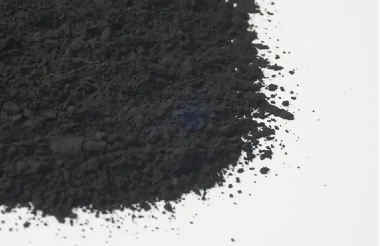
In today’s rapidly evolving energy landscape, the demand for efficient, high-performance energy storage devices has never been greater. From electric vehicles and renewable energy grids to industrial machinery and portable electronics, the need for devices capable of delivering both high power and long-lasting reliability is expanding exponentially. Among the technologies that have risen to meet this demand, supercapacitors stand out as a versatile and reliable solution. Unlike traditional batteries, supercapacitors are designed to store energy physically rather than chemically, allowing them to charge and discharge at remarkable speeds, provide extended lifetimes, and endure millions of cycles without significant degradation. At the core of many of these high-performance devices lies a critical material: activated carbon. Understanding why activated carbon is the preferred material for supercapacitor electrodes requires a deep dive into its properties, manufacturing processes, and the unique advantages it brings to energy storage technology.
Understanding Supercapacitors and Their Function
To comprehend the role of activated carbon in supercapacitors, it is essential first to understand what supercapacitors are and how they function. Supercapacitors, also known as ultracapacitors or electrochemical capacitors, differ from batteries in the way they store energy. While batteries rely on chemical reactions that produce a flow of electrons over time, supercapacitors store energy via the formation of an electric double layer at the interface of the electrode and the electrolyte. This mechanism allows them to charge and discharge extremely rapidly, offering high power density, which is ideal for applications that require quick bursts of energy.
Additionally, supercapacitors possess excellent cycle stability, often surviving hundreds of thousands to millions of charge-discharge cycles. This durability makes them particularly suitable for use in vehicles, industrial equipment, and other applications where frequent and rapid energy delivery is required. However, the performance of a supercapacitor is heavily dependent on the electrode material. Among various options explored by scientists and engineers—including graphene, carbon nanotubes, and metal oxides—activated carbon has consistently proven to be the most practical and effective choice.
Key Properties of Activated Carbon for Supercapacitors
Activated carbon is a specially processed form of carbon that is characterized by extremely high surface area, porosity, and chemical stability. These properties make it uniquely suited for supercapacitor applications.
High Specific Surface Area
One of the most critical attributes of activated carbon is its high specific surface area, which can exceed 1,500 square meters per gram in high-quality samples. This large surface area is crucial because the electric double-layer capacitance is proportional to the available electrode surface area. More surface area translates directly into a higher capacity to store charge, allowing supercapacitors to achieve significantly higher energy densities compared to other carbon-based materials.
Hierarchical Porous Structure
Activated carbon is inherently porous, with a range of pore sizes classified as micropores (<2 nm), mesopores (2–50 nm), and macropores (>50 nm). Each type of pore contributes differently to supercapacitor performance:
Micropores provide enormous surface area for charge accumulation, enhancing capacitance.
Mesopores facilitate the movement of ions throughout the electrode, enabling faster charging and discharging.
Macropores serve as ion-buffering spaces, ensuring that the electrolyte can penetrate deeper into the electrode structure.
This hierarchical pore structure ensures a balance between energy storage and power delivery, making activated carbon electrodes highly efficient.
Electrical Conductivity
While activated carbon is not as conductive as metals, its intrinsic conductivity is sufficient for supercapacitor applications when combined with conductive additives such as carbon black. Adequate conductivity ensures minimal internal resistance, reducing energy losses and enabling high power output.
Chemical and Electrochemical Stability
Activated carbon is highly resistant to chemical degradation, even in aggressive electrolyte environments. This chemical stability is a key factor in the long cycle life of supercapacitors. Electrodes made from activated carbon can endure hundreds of thousands of cycles with minimal loss in performance, making them ideal for industrial, automotive, and energy grid applications.
Tunable Surface Chemistry
Activated carbon can be chemically modified to introduce functional groups, such as oxygen- or nitrogen-containing moieties. These functional groups improve the wettability of the electrode, enhancing electrolyte penetration, and sometimes contribute pseudo-capacitance via redox reactions. This capability provides an additional mechanism for charge storage beyond the electric double layer, further increasing the overall capacitance of the supercapacitor.
Advantages Over Alternative Materials
Although other materials like graphene, carbon nanotubes, and metal oxides offer impressive theoretical properties, activated carbon continues to dominate commercial supercapacitor production due to its unique combination of performance, cost, and manufacturability.
Cost-effectiveness: Activated carbon is inexpensive to produce compared to graphene or carbon nanotubes.
Scalability: It can be manufactured from abundant carbon-rich sources, such as coconut shells, wood, and coal.
Proven Performance: Decades of research and application demonstrate consistent results in commercial supercapacitors.
Versatile Fabrication: Activated carbon can be processed into powders, granules, or sheets, making it suitable for a variety of electrode designs.
These advantages make activated carbon a practical and reliable choice for a wide range of supercapacitor applications.
Production of Activated Carbon for Supercapacitor Electrodes
The manufacturing process for activated carbon tailored for supercapacitors involves carbonization and activation, which together create a material with the high surface area, porosity, and surface chemistry needed for optimal performance.
Carbonization
Raw carbon-rich materials undergo thermal treatment in an inert atmosphere at temperatures between 600°C and 900°C. This step removes volatile components and creates a rudimentary porous carbon structure.
Activation
Activation is the process that greatly enhances the surface area and develops a hierarchical pore structure. Activation can be conducted through:
Physical activation: Using steam or carbon dioxide at high temperatures to etch the carbon and form pores.
Chemical activation: Utilizing activating agents such as potassium hydroxide (KOH) or phosphoric acid (H₃PO₄) to generate extensive micropores and mesopores.
The resulting activated carbon exhibits the characteristics necessary for high-performance supercapacitor electrodes.
Electrode Fabrication
Activated carbon is then mixed with a binder (commonly PTFE or PVDF) and conductive additives to form a slurry. This mixture is coated onto a current collector, such as aluminum foil, and pressed to form a uniform electrode. The porosity and surface area of the activated carbon ensure that ions from the electrolyte can access the electrode efficiently, maximizing capacitance and power density.
Applications of Activated Carbon-Based Supercapacitors
Activated carbon supercapacitors are widely used in various fields due to their unique properties:
Electric Vehicles (EVs): Providing rapid energy bursts for acceleration and regenerative braking.
Renewable Energy Storage: Stabilizing energy output in solar and wind systems.
Industrial Machinery: Supporting cranes, forklifts, and heavy equipment requiring high power.
Consumer Electronics: Powering devices that demand frequent rapid charging cycles.
In all these scenarios, the combination of high power density, rapid charge/discharge capability, and long cycle life makes activated carbon the preferred choice for electrode material.
Recent Innovations and Future Directions
The development of activated carbon materials continues to evolve, with research focusing on enhancing both energy and power density:
Biomass-Derived Activated Carbon: Using agricultural and forestry waste to produce sustainable, high-performance electrodes.
Hybrid Materials: Combining activated carbon with graphene or metal oxides to leverage both double-layer and pseudo-capacitance effects.
Nano-Structured Carbon: Fine-tuning pore size and surface chemistry to optimize ion transport and charge storage.
These innovations promise to improve energy storage capabilities, making supercapacitors an increasingly competitive technology for a variety of industrial and consumer applications.
Conclusion
Activated carbon plays a critical role in the success of modern supercapacitors. Its high surface area, hierarchical pore structure, chemical stability, and tunable surface chemistry enable rapid energy storage and delivery, long cycle life, and exceptional efficiency. For enterprises seeking high-performance energy storage solutions, leveraging the advantages of activated carbon-based supercapacitors is essential. At Zhejiang Apex Energy Technology Co., Ltd., we utilize premium activated carbon to design and manufacture advanced supercapacitors suitable for automotive, industrial, renewable energy, and consumer electronics applications. Our expertise ensures reliable, efficient, and sustainable energy storage solutions. Businesses and researchers looking for top-tier performance can contact us to explore how our innovative supercapacitor technologies can meet their specific energy storage needs.
FAQ
Q: What makes activated carbon ideal for supercapacitors?
A: Activated carbon provides high surface area, hierarchical porosity, chemical stability, and moderate conductivity, all of which enhance charge storage and fast energy delivery.
Q: How does pore structure influence supercapacitor performance?
A: Micropores maximize surface area for charge storage, while meso- and macropores facilitate ion movement, enabling rapid charge and discharge.
Q: Can activated carbon supercapacitors be used in electric vehicles?
A: Yes, they support regenerative braking, acceleration bursts, and energy stabilization due to high power density and long cycle life.
Q: Are there environmentally friendly sources for activated carbon?
A: Yes, biomass-derived activated carbon from coconut shells, wood, and agricultural waste offers sustainable and high-performance electrode material.


