As silicon continues to play an increasingly important role in advanced energy storage and electronic materials, manufacturers face a persistent challenge: how to control silicon deposition while maintaining structural stability, conductivity, and long-term performance. Silicon offers outstanding theoretical advantages, but its behavior during deposition—especially volume change, stress accumulation, and interface instability—creates significant technical barriers.
Porous carbon has emerged as a key enabling material for addressing these challenges. In silicon deposition systems, porous carbon is not merely a passive substrate. Instead, it functions as an active structural framework that influences silicon distribution, adhesion, mechanical integrity, and electrochemical behavior. Understanding what porous carbon is and why it is essential for silicon deposition is increasingly important for industrial material designers, battery manufacturers, and energy technology developers.
1. What Is Porous Carbon?
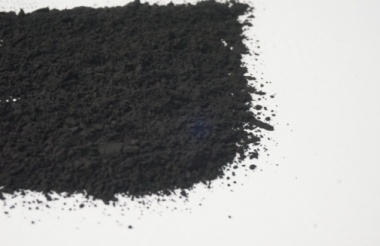
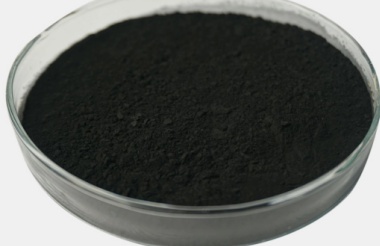
Porous carbon is a class of carbon materials defined by a network of interconnected pores within a conductive carbon matrix. Unlike dense graphite or solid carbon, porous carbon contains internal voids that significantly increase its surface area and structural adaptability.
These pores can be engineered across multiple scales, allowing porous carbon to host, anchor, or support deposited silicon while maintaining electrical continuity and mechanical resilience.
Core Characteristics of Porous Carbon
Characteristic | Description | Industrial Significance |
High surface area | Typically 300–2000 m²/g | Improves silicon adhesion |
Tunable pore structure | Micro-, meso-, and macropores | Controls silicon deposition behavior |
Conductive framework | Continuous carbon matrix | Maintains electron transport |
Mechanical flexibility | Elastic carbon skeleton | Buffers silicon stress |
For silicon deposition applications, these properties allow porous carbon to function as both a structural host and a performance stabilizer.
2. Why Porous Carbon Is Ideal for Silicon Deposition
Silicon deposition processes—whether achieved through chemical vapor deposition (CVD), melt infiltration, or electrochemical deposition—inevitably introduce significant mechanical, thermal, and interfacial stress. Silicon undergoes substantial volume variation during deposition and subsequent operation, particularly in electrochemical systems where repeated expansion and contraction occur. Without an appropriate host structure, deposited silicon layers are prone to cracking, delamination, and loss of electrical continuity.
Porous carbon addresses these challenges by acting as a structural buffer and conductive scaffold. Unlike dense carbon materials, porous carbon provides controlled internal free volume that allows silicon to expand without inducing destructive stress. At the same time, its continuous carbon framework ensures that electrical pathways remain intact even when silicon undergoes mechanical deformation.
Key Advantages of Porous Carbon in Silicon Deposition
Anchoring sites for uniform silicon growth
The high internal surface area of porous carbon provides abundant nucleation points, promoting uniform silicon deposition rather than localized clustering.
Accommodation of silicon expansion during cycling or thermal processing
Internal pores act as expansion reservoirs, mitigating stress buildup that would otherwise lead to fracture.
Prevention of particle agglomeration and detachment
Silicon confined within pores remains mechanically supported, reducing the risk of particle isolation.
Preservation of conductive pathways after deposition
The carbon matrix maintains continuous electron transport even if silicon partially cracks or restructures.
Because of these combined effects, porous carbon has become the preferred platform for advanced silicon-based composite materials, especially in high-performance energy storage systems.
3. Pore Structure and Its Role in Silicon Deposition
The effectiveness of porous carbon in silicon deposition is strongly dependent on its pore architecture. Pore size, distribution, and connectivity directly influence how silicon is deposited, how stress is distributed, and how the composite performs over time.
Classification by Pore Size and Function
Pore Type | Diameter Range | Function in Silicon Deposition |
Micropores | < 2 nm | Enhance silicon nucleation |
Mesopores | 2–50 nm | Buffer volume expansion |
Macropores | > 50 nm | Reduce internal stress |
Micropores provide high surface energy sites that promote silicon nucleation and improve interfacial bonding.
Mesopores serve as the primary expansion buffer, allowing silicon to swell without fracturing the surrounding structure.
Macropores improve mass transport and reduce overall stress accumulation during large-scale deposition or cycling.
In practical industrial applications, hierarchical porous carbon—which integrates micro-, meso-, and macropores within a single structure—is often preferred. This multi-scale pore system balances deposition efficiency, mechanical durability, and long-term stability.
4. Manufacturing Methods of Porous Carbon for Silicon Deposition
Industrial porous carbon is not a single standardized material but a broad category of engineered carbon frameworks produced through carefully controlled manufacturing routes. Each production method directly influences pore size distribution, surface chemistry, mechanical strength, electrical conductivity, and—most importantly—batch-to-batch consistency, which is critical for scalable silicon deposition processes.
Common Manufacturing Routes
Method | Key Features | Suitability |
Chemical activation | High surface area | Cost-effective production |
Template-assisted synthesis | Precise pore control | High-performance silicon systems |
Polymer-derived carbon | Uniform structure | Advanced deposition processes |
Biomass-derived carbon | Sustainable sourcing | ESG-focused applications |
Chemical activation remains the most widely used industrial method due to its scalability and relatively low production cost. By activating carbon precursors with agents such as KOH or CO₂, manufacturers can achieve extremely high surface areas. However, this method often produces non-uniform pore distributions, which may limit performance consistency in precision silicon deposition applications.
Template-assisted synthesis offers a higher level of structural control. By using sacrificial templates (such as silica or polymer spheres), manufacturers can engineer pore size, shape, and connectivity with precision. This method is particularly well-suited for high-performance silicon systems where predictable deposition behavior and mechanical stability are essential.
Polymer-derived carbon is produced by carbonizing pre-designed polymer networks. This approach yields highly uniform pore structures and controlled surface chemistry, making it compatible with advanced deposition techniques such as CVD. Although more costly, it delivers superior reproducibility.
Biomass-derived carbon utilizes renewable feedstocks such as cellulose or lignin. While sustainability is its key advantage, careful processing control is required to ensure material purity and consistent pore architecture—both critical for silicon integration.
For silicon deposition, consistency in pore distribution is critical. Variations across production batches can result in uneven silicon loading, unpredictable expansion behavior, and inconsistent downstream performance, particularly in automated manufacturing environments.
5. Interface Stability Between Porous Carbon and Silicon
One of the most critical roles of porous carbon is stabilizing the carbon–silicon interface. Interface degradation is a leading failure mechanism in silicon-based composite materials, often resulting in electrical disconnection, rapid capacity loss, or structural collapse.
Porous carbon enhances interface stability through several synergistic mechanisms:
Increased effective contact area between silicon and carbon improves interfacial adhesion and charge transfer efficiency.
Reduced localized stress concentration by distributing mechanical strain across a three-dimensional pore network.
Support for uniform silicon layer formation, preventing localized thick regions that are prone to cracking.
Limitation of crack propagation by interrupting fracture paths within the porous framework.
This interface stabilization is especially critical in high-cycle applications, such as lithium-ion battery anodes, where repeated expansion and contraction would quickly destroy poorly bonded silicon layers. By maintaining intimate and resilient contact between silicon and the conductive carbon matrix, porous carbon significantly extends operational lifespan and reliability.

6. Thermal and Chemical Stability During Deposition
Silicon deposition processes frequently involve elevated temperatures and chemically reactive environments. Under these conditions, porous carbon must retain both its structural integrity and electrical conductivity.
Stability Performance
Property | Porous Carbon Performance |
Thermal resistance | Stable at elevated temperatures |
Chemical compatibility | Resistant to common deposition agents |
Structural integrity | Maintains pore framework |
Conductivity retention | Minimal degradation |
High-quality porous carbon materials resist structural collapse during thermal cycling and remain chemically stable in the presence of deposition gases or molten silicon. This stability ensures consistent performance not only during deposition but also throughout long-term operation.
7. Design Considerations for Industrial Buyers
When sourcing porous carbon for silicon deposition, industrial buyers should evaluate more than surface area alone. Over-optimization of a single parameter often compromises overall system reliability.
Key Selection Criteria
Parameter | Importance |
Pore volume | Determines expansion accommodation |
Carbon purity | Affects long-term reliability |
Mechanical strength | Prevents framework collapse |
Surface chemistry | Influences silicon adhesion |
Batch consistency | Ensures scalable production |
Optimizing these parameters enables reliable integration of porous carbon into automated, large-scale manufacturing systems. A balanced approach—combining structural durability, interfacial stability, and consistent material quality—is essential for successful silicon deposition in industrial applications.
8. Applications of Porous Carbon in Silicon-Based Systems
Porous carbon for silicon deposition is widely applied in:
Silicon-carbon composite anodes
Advanced lithium-ion batteries
Energy storage research platforms
High-temperature silicon composites
Its versatility makes porous carbon a foundational material in next-generation energy technologies.
Conclusion: Why Porous Carbon Matters in Silicon Deposition
Porous carbon is far more than a support material—it is a functional framework that enables silicon deposition to occur in a controlled, stable, and scalable manner. By accommodating stress, preserving conductivity, and stabilizing interfaces, porous carbon transforms silicon from a fragile high-capacity material into a viable industrial solution.
As silicon-based technologies continue to advance, porous carbon will remain a critical component in bridging performance potential with real-world reliability. For organizations exploring advanced material systems, Zhejiang Apex Energy Technology Co., Ltd. works closely with partners across the energy materials supply chain. We welcome technical discussions and collaborative exploration of porous carbon solutions for silicon deposition applications.
FAQ
What is porous carbon used for in silicon deposition?
Porous carbon provides structural support, surface area, and stress buffering for deposited silicon.
Why is porous carbon preferred over solid carbon?
Its internal pores accommodate silicon expansion and improve interface stability.
Which pore size is best for silicon deposition?
Mesoporous or hierarchical structures offer the best balance of stability and deposition efficiency.
Can porous carbon be customized for different deposition methods?
Yes, pore structure and surface chemistry can be tailored to specific silicon deposition processes.