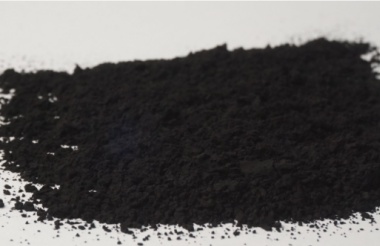
Using standard commercial activated carbon in advanced energy storage applications creates fatal performance bottlenecks. Procurement teams often discover this reality the hard way. They watch expensive prototypes suffer from extreme internal resistance and rapid cell degradation. The root of this widespread problem lies deep within the material's fundamental architecture. Electrochemical Double-Layer Capacitors (EDLCs) operate in a highly specialized environment. Both traditional and electrochemical carbons rely on vast surface areas. However, supercapacitor activated carbon is precision-engineered specifically for rapid ion transport and absolute electrochemical stability. You simply cannot swap one for the other without facing catastrophic failure. We will dissect the exact structural, electrochemical, and commercial differences between these materials. This comprehensive guide equips engineering and procurement teams to make evidence-based sourcing decisions. You will quickly learn how exact pore hierarchy, stringent purity standards, and total cost of ownership determine the ultimate success of your energy storage products.
Key Takeaways
Pore Engineering: Supercapacitor variants require a highly controlled ratio of micropores (<2 nm) for energy storage and mesopores (2–50 nm) for rapid ion transport.
Purity & Life Cycle: Extreme purity (low ash content) in supercapacitor carbon is non-negotiable to prevent Faraday side reactions and severe self-discharge.
Cost-to-Performance Reality: While standard activated carbon is significantly cheaper upfront, supercapacitor-grade carbon delivers the required volumetric capacitance (100–300 F/g) and million-cycle lifespan necessary for commercial EDLCs.
Scalability: At $10–$30/kg, supercapacitor activated carbon remains the only commercially viable electrode material compared to laboratory-stage alternatives like MXene or pristine graphene.
The Core Problem: Why Traditional Activated Carbon Fails in EDLCs
Engineers frequently assume all porous carbon materials behave similarly. They absolutely do not. The standard commercial activated carbon solves a very specific engineering problem. It is optimized for the physical adsorption of gas molecules, like volatile organic compounds (VOCs). It also excels at trapping liquid impurities during municipal water treatment. However, it fails completely when tasked with rapid, reversible electrochemical ion storage.
We must examine the "Transmission Line Model" to understand this electrolyte mismatch. This accepted mathematical framework represents porous electrodes as a complex network of distributed resistors and capacitors. In an EDLC, electrolyte ions must travel deep into the carbon pores to store electrical charge. Traditional carbon features highly random pore distributions. Many of these pores are simply too small. Electrolyte ions carry a bulky solvation shell. They cannot physically enter these tiny spaces. This dimensional mismatch creates massive "dead zones" across the material. The theoretical surface area contributes nothing to measurable capacitance. Instead, it acts as a roadblock and drives up internal electrical resistance.
You must also seriously evaluate the operational risk of self-discharge. Traditional bulk carbons naturally contain high levels of ash. They also harbor trace metallic impurities. In a high-voltage capacitor environment, these impurities pose a fatal threat. They trigger irreversible Faraday redox reactions instead of facilitating clean physical double-layer storage. These parasitic chemical reactions lead directly to rapid self-discharge. They generate excessive internal heat. Eventually, they cause severe cell swelling and guarantee premature EDLC death.
Structural and Electrochemical Evaluation Criteria
When evaluating potential electrode materials, you must look far beyond basic surface area metrics. The true metric of commercial success lies in pore hierarchy. You need a perfect physical balance between bulk energy storage and rapid power delivery.
Micropores measure strictly under 2 nanometers in diameter. They serve to maximize the specific surface area of the electrode. They act as the primary ion storage sites during charging. Maximizing these structures directly maximizes your overall Energy Density. Conversely, mesopores range from 2 to 50 nanometers. They serve as multi-lane transport "highways" for incoming and outgoing electrolyte ions. They heavily reduce ion diffusion resistance. This mesopore structure maximizes your total Power Density. A pure micropore structure charges too slowly. A pure mesopore structure holds too little charge.
Next, surface chemistry dictates electrolyte wettability. Commercial supercapacitor activated carbon undergoes customized surface group modification. This crucial step ensures complete material wetting by specific organic electrolytes or aqueous solutions. Perfect wetting minimizes the Equivalent Series Resistance (ESR) of the cell. Standard filter carbons completely lack this tailored surface chemistry. They often repel modern organic electrolytes.
We can clearly see the divide in their standard electrochemical baselines. Commercial supercapacitor grades reliably yield specific capacitances between 100 and 200+ F/g. Traditional carbon yields highly unstable and negligible capacitance. Furthermore, purpose-built variants endure over one million rapid charge and discharge cycles without failing. They achieve this infinite lifespan because their storage mechanism relies on purely physical double-layer formation. No chemical bonds break or form during operation.
Evaluation Metric | Supercapacitor Activated Carbon | Traditional Activated Carbon |
Primary Mechanism | Reversible Electrochemical Storage | Physical Impurity Adsorption |
Pore Architecture | Hierarchical (Micro + Meso) | Randomly Distributed |
Ash Content | Strictly < 1% | Often 5% to 15% |
Expected Cycle Life | 1,000,000+ Cycles | Fails rapidly in electrolytes |
Specific Capacitance | 100 - 300 F/g | Negligible / Unstable |
Manufacturing Rigor and Material Purity (Implementation Risks)
Procurement teams face severe implementation risks if they ignore upstream manufacturing rigor. The performance gap between commercial and premium carbon begins entirely at the feedstock level. You cannot engineer out bad raw materials.
Standard carbons utilize cheap bulk wood, coal, or peat. These heavily mined precursors contain naturally high impurities. In contrast, energy storage systems demand high-purity precursors. Elite manufacturers rely strictly on premium coconut shells, specialized synthetic pitch, or high-grade phenolic resins. Coconut shell specifically provides an ideal natural density for micropore formation.
Activation precision represents another massive implementation hurdle. Creating the ideal pore size distribution requires extreme environmental control. You cannot simply burn the carbon.
Strict Activation Curves: Manufacturers use tightly controlled steam or carbon dioxide activation curves. Temperature ramps must be exact to the degree.
Advanced Methods: Some suppliers employ advanced KOH-free methods. This prevents corrosive metallic residue from lingering in the final product.
Skeleton Preservation: The thermal process must carve out precise mesopores without destroying the underlying structural carbon skeleton. Over-activation causes the material to collapse.
Finally, buyers must actively address the hidden risk of batch consistency. Natural biomass variance remains a real threat to production. Uncontrolled raw materials lead directly to wildly fluctuating cell performance on the assembly line. Top-tier suppliers deploy specialized equipment to solve this exact issue. They use advanced rotary kilns to ensure highly uniform material heating. They utilize intense air-jet milling to guarantee perfectly consistent particle sizes. They also implement proprietary multi-stage acid-washing protocols. These rigorous steps guarantee strict lot-to-lot consistency and maintain ash content safely below 1%.
TCO and Alternative Material Realities (The ROI Framework)
Design engineers often read exciting headlines about breakthrough nanomaterials. However, commercial viability tells a much harsher story. We must rigorously evaluate all electrode materials through a Total Cost of Ownership (TCO) framework. Laboratory miracles rarely survive the harsh reality of factory procurement.
Currently, the commercial baseline for high-grade carbon remains highly attractive. Supercapacitor-grade activated carbon costs approximately $10 to $30 per kilogram. This highly scalable pricing model makes mass production possible for automotive and consumer electronics applications.
We frequently encounter alternative material fallacies in modern R&D departments. Graphene, carbon nanotubes (CNTs), and MXene dominate academic literature. They certainly boast superior laboratory conductivity. Their theoretical surface areas easily exceed 2000 m²/g. Yet, they universally fail the commercial viability test. Their prohibitive manufacturing costs range from $100 to well over $1,000 per kilogram. They also suffer from severe, unresolved scale-up issues. For instance, pristine graphene sheets notoriously restack during commercial electrode coating. This restacking phenomenon instantly destroys the highly accessible surface area you just paid a massive premium to acquire.
Material Type | Estimated Cost ($/kg) | Commercial Scalability | Primary Restraint |
Supercapacitor Activated Carbon | $10 - $30 | Excellent (Global Supply) | Upper energy density limits |
Reduced Graphene Oxide (rGO) | $100 - $300+ | Poor to Moderate | Layer restacking in electrodes |
MXene | $500 - $1,000+ | Laboratory Only | Extreme cost, oxidation risks |
Carbon Nanotubes (CNTs) | $150 - $500 | Moderate (As Additives) | Dispersion difficulty, cost |
Ultimately, your primary TCO driver dictates project success. Precision-engineered activated carbon consistently provides the optimal "Cost per Farad" metric. It also delivers the best "Cost per Watt-hour" ratio on the market. It reliably averages 5 to 8 Wh/kg at easily scalable industrial costs. This dominant economic reality secures its ongoing position as the undisputed foundation for commercial energy storage.
Supplier Shortlisting Logic: How to Audit Supercapacitor Carbon
Procurement processes for energy storage materials require strict auditing logic. Do not accept basic BET surface area data as sufficient proof of quality. High surface area means nothing if the pores are inaccessible. You must formally evaluate actual electrochemical capabilities.
First, demand proper lab-grade documentation. Shortlist only the suppliers who willingly provide comprehensive electrochemical test data. Ask to review their Cyclic Voltammetry (CV) charts. You want to see perfectly rectangular curves across various scan rates. This geometric shape proves ideal double-layer capacitance. If you spot redox peaks (humps) in the curve, reject the material. These peaks indicate unwanted metallic impurities. Next, analyze their Constant Current Charge-Discharge (CCD) graphs. Check the initial IR-drop carefully at the exact moment current reverses. A minimal voltage drop verifies low ESR and superior power capability.
Second, you must physically or virtually assess their internal washing and milling capabilities. Procurement should strictly audit the supplier's post-processing operations. High internal capability in acid-washing is non-negotiable. It is the only way to effectively remove active metal ions. Furthermore, precise jet-milling ensures incredibly uniform particle size distributions. Both capabilities are strictly required to achieve smooth, defect-free electrode coating.
Finally, implement a rigorous internal testing protocol before signing major contracts.
Initiate Pilot Testing: Start entirely with small-batch testing in coin cells. Do not rush to cylindrical formats.
Match Electrolyte Systems: Test the material exclusively in your target organic or aqueous electrolyte. Material performance shifts drastically between solvents.
Verify Batch Consistency: Demand blind samples from at least three distinct production lots. Validate electrochemical uniformity across all three before committing to tonnage.
Conclusion
We must reiterate one fundamental truth. Supercapacitor carbon is a highly refined, purpose-built electrochemical material. It is absolutely not a bulk filtration commodity. Recognizing this distinction saves thousands of hours in failed R&D efforts.
Trying to aggressively cut costs by sourcing lower-grade commercial carbon will backfire entirely. This shortcut guarantees high internal resistance, excessive cell heat, and inevitable product failure in the field. Your energy storage system will only perform as well as its weakest component.
Your engineering and procurement teams should immediately audit your current supply chain. Verify your current purity levels and mesopore ratios. Contact reputable manufacturers to request detailed technical data sheets (TDS) and exact pore size distribution metrics. Always secure pilot samples to validate real-world performance in your specific EDLC configurations before scaling up.
FAQ
Q: Can I use traditional activated carbon in an EDLC prototype?
A: No. Traditional carbon relies heavily on physical adsorption mechanisms and entirely lacks a balanced mesopore structure. This creates massive internal resistance. Poor ion accessibility will yield completely unusable capacitance data. It will heavily skew your prototype results and guarantee early cell failure.
Q: What is the ideal specific surface area for supercapacitor activated carbon?
A: The optimal specific surface area typically ranges from 1,000 to over 2,000 m²/g. However, total surface area alone does not dictate performance. The pore size distribution is far more critical. You need an exact micropore-to-mesopore ratio to balance high energy storage with rapid ion delivery.
Q: Why is low ash content so critical for energy storage?
A: Ash and metallic impurities act as unwanted catalysts. In high-voltage environments, they trigger unintended chemical side reactions. These irreversible Faraday reactions lead directly to capacitor swelling, high leakage currents, excess heat generation, and rapid self-discharge. They ultimately destroy the cell from the inside out.
Q: Is biomass-derived carbon reliable for supercapacitors?
A: Yes, biomass-derived materials—particularly premium coconut shell—are highly reliable. They naturally produce excellent micropore structures. However, this reliability depends entirely on the manufacturer. They must strictly utilize stringent QA/QC protocols and advanced acid-washing processes to successfully mitigate the natural variations found in raw biomass.


