As silicon-based materials continue to gain attention in advanced energy storage systems, choosing the right carbon framework has become a critical decision for manufacturers. Whether the goal is to improve cycle life, stabilize silicon expansion, or enhance charge transport, the carbon material used as a host or deposition substrate plays a decisive role.
Two major categories are often considered: supercapacitor activated carbon and battery carbon materials. Although both are carbon-based, their internal structures, surface chemistry, and performance characteristics differ significantly—especially when applied to silicon deposition processes.
In this article, we explore the fundamental differences between supercapacitor activated carbon and battery carbon materials, with a specific focus on how each performs in silicon deposition applications. From pore architecture to interface stability, we examine which material is better suited for industrial-scale silicon-based systems and why.
1. Understanding Supercapacitor Activated Carbon
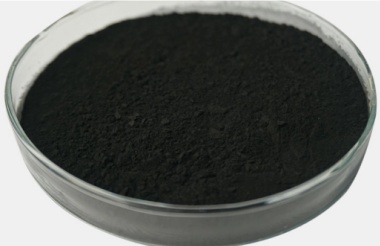
Supercapacitor activated carbon is specifically engineered to store electrical energy through electrostatic charge accumulation. Its defining feature is an extremely high specific surface area, typically achieved through chemical or physical activation processes.
Key Characteristics of Supercapacitor Activated Carbon
Ultra-high surface area (often >1500 m²/g)
Dominantly microporous and mesoporous structure
Excellent electrical conductivity
High chemical and thermal stability
Fast ion transport capability
In energy storage systems, this material enables rapid charge–discharge behavior and long cycle life. When repurposed for silicon deposition, these same properties provide abundant nucleation sites and strong electrical pathways for deposited silicon.
2. Overview of Battery Carbon Materials
Battery carbon materials represent a broad and mature category of carbon-based materials that have been optimized primarily for lithium-ion battery systems. This category includes graphite, hard carbon, soft carbon, and carbon black, each serving a specific functional role within battery electrodes.
Graphite remains the most widely used anode material due to its stable layered structure and predictable lithium intercalation behavior. Hard carbon and soft carbon are often used in sodium-ion or specialized lithium-ion batteries where different voltage profiles or structural characteristics are required. Carbon black, on the other hand, is typically employed as a conductive additive to improve electrical connectivity within electrode formulations.
Typical Features of Battery Carbon Materials
Lower surface area compared to activated carbon, usually optimized to avoid excessive electrolyte decomposition
More compact or layered internal structures, especially in graphite-based materials
Designed specifically for lithium intercalation, rather than hosting large-volume active materials
Higher tap density, enabling higher volumetric energy density in conventional batteries
Strong mechanical rigidity, providing structural stability during electrode fabrication
These characteristics make battery carbon materials highly effective for traditional battery architectures. However, when applied to silicon deposition, their limitations become more apparent. Silicon undergoes significant volume expansion during deposition and cycling, often exceeding 300%. Battery carbon materials typically lack sufficient internal pore volume and accessible surface area to accommodate this expansion effectively.
As a result, silicon deposited onto conventional battery carbon materials tends to experience stress concentration, cracking, and eventual detachment. While surface coatings or polymer binders can partially mitigate these issues, they also increase system complexity and reduce overall material efficiency.
3. Structural Differences and Their Impact on Silicon Deposition
The most critical distinction between supercapacitor activated carbon and battery carbon materials lies in their pore architecture and spatial structure. These structural differences directly determine how silicon is deposited, distributed, and stabilized within the carbon framework.
Structural Comparison
Parameter | Supercapacitor Activated Carbon | Battery Carbon Materials |
Surface area | Extremely high | Moderate to low |
Dominant pore type | Micro / mesopores | Limited pores or layered |
Silicon anchoring | Excellent | Restricted |
Expansion buffering | Strong | Limited |
Deposition uniformity | High | Variable |
Supercapacitor activated carbon is engineered with a three-dimensional porous network that spans micro-, meso-, and sometimes macropore ranges. This hierarchical pore structure creates abundant anchoring sites for silicon nucleation while providing internal void space to absorb volumetric expansion.
Battery carbon materials, by contrast, are often dominated by dense or layered structures with limited internal voids. While this configuration is ideal for lithium intercalation, it restricts silicon accommodation. Silicon deposited on such surfaces tends to form dense clusters or surface layers rather than penetrating into a stabilizing framework.
From an industrial deposition standpoint, pore connectivity is equally important. Activated carbon allows silicon to be deposited throughout the internal structure, resulting in uniform silicon distribution and reduced local stress. Battery carbon materials often exhibit uneven silicon loading, leading to inconsistent mechanical behavior across the composite.
4. Interface Stability Between Carbon and Silicon
One of the primary failure mechanisms in silicon-based composites is carbon–silicon interface degradation. Poor interfacial bonding leads to electrical disconnection, mechanical fracture, and rapid performance decay—particularly under repeated cycling or thermal stress.
Why Supercapacitor Activated Carbon Excels
High surface area increases effective carbon–silicon contact, improving adhesion strength
Porous structure distributes mechanical stress, preventing localized strain accumulation
Reduces crack initiation during silicon expansion, extending structural integrity
Maintains continuous conductive pathways, even after repeated expansion–contraction cycles
The internal pore walls of activated carbon act as mechanical buffers, allowing silicon to expand inward rather than outward. This significantly reduces interfacial shear forces that commonly cause silicon detachment in dense carbon systems.
Battery carbon materials often rely on external binders, coatings, or surface treatments to improve silicon adhesion. While these methods can enhance short-term stability, they add cost, reduce active material utilization, and introduce additional failure points over long-term operation.
In contrast, supercapacitor activated carbon inherently provides interfacial stability through its structure, reducing dependence on auxiliary materials and improving overall system reliability.
5. Thermal and Chemical Stability During Deposition
Silicon deposition processes—such as chemical vapor deposition (CVD), melt infiltration, or electrochemical deposition—frequently involve elevated temperatures and chemically reactive environments. Under these conditions, carbon materials must maintain both structural integrity and electrical conductivity.
Stability Performance Comparison
Property | Supercapacitor Activated Carbon | Battery Carbon Materials |
Thermal resistance | High | Moderate |
Chemical tolerance | Strong | Application-dependent |
Structural retention | Excellent | Risk of collapse |
Conductivity after deposition | Stable | May degrade |
Supercapacitor activated carbon demonstrates strong thermal resistance due to its robust carbon framework and low defect-induced collapse risk. Its chemical tolerance allows it to remain stable in the presence of deposition precursors, reducing unwanted side reactions.
Battery carbon materials, particularly those with layered graphite structures, may experience structural degradation or conductivity loss when exposed to aggressive deposition environments. Pore collapse, surface passivation, or partial oxidation can compromise performance during or after silicon deposition.
For industrial-scale silicon systems that require repeated processing cycles and long-term operational stability, supercapacitor activated carbon provides a more resilient and predictable foundation.

6. Electrical Conductivity and Charge Transport
In silicon-based energy systems, conductivity is critical. Silicon itself has limited conductivity, making the carbon framework responsible for charge transport.
Supercapacitor activated carbon provides:
Continuous conductive networks
Short electron transport paths
Reduced internal resistance
Battery carbon materials often require additional conductive additives when used in silicon composites, adding complexity and reducing effective energy density.
7. Manufacturing Consistency and Industrial Scalability
From an industrial perspective, material consistency is as important as performance.
Supercapacitor activated carbon is typically produced through controlled activation processes, allowing:
Battery carbon materials vary widely depending on precursor source and graphitization conditions, which can lead to inconsistent silicon deposition outcomes at scale.
8. Cost and Value Considerations
While supercapacitor activated carbon may appear more expensive on a per-kilogram basis, its functional efficiency often leads to lower system-level costs.
Cost Factor | Activated Carbon | Battery Carbon |
Silicon utilization | High | Moderate |
Cycle life improvement | Significant | Limited |
Process complexity | Lower | Higher |
Long-term reliability | Strong | Variable |
When evaluated over the full lifecycle of silicon-based products, supercapacitor activated carbon frequently delivers superior value.
9. Which Carbon Material Is Better for Silicon Deposition?
For applications involving silicon deposition, especially in advanced energy storage and composite systems, supercapacitor activated carbon offers clear advantages:
Better silicon anchoring
Improved expansion buffering
Enhanced interface stability
Stronger conductivity retention
Battery carbon materials remain valuable for traditional lithium-ion systems but are often less effective as structural hosts for silicon.
10. Conclusion
The difference between supercapacitor activated carbon and battery carbon materials goes far beyond surface area—it directly affects silicon deposition efficiency, interface stability, and long-term performance.
As silicon-based technologies continue to evolve, selecting the right carbon framework becomes a strategic decision rather than a material choice. Supercapacitor activated carbon provides the structural resilience, electrical connectivity, and process stability required for next-generation silicon systems.
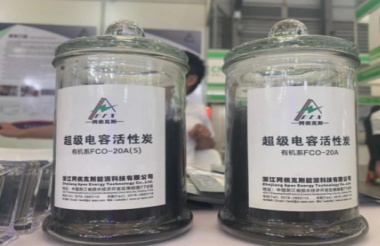
At Zhejiang Apex Energy Technology Co., Ltd., we focus on engineered carbon materials designed for demanding industrial environments, including silicon deposition applications. Our experience in pore-structure control and material consistency allows us to support manufacturers seeking reliable, scalable solutions for advanced energy systems. We welcome further technical discussions and collaboration opportunities.
FAQ
1. Is supercapacitor activated carbon suitable for silicon-based anodes?
Yes. Its high surface area and porous structure make it highly effective for silicon anchoring and expansion buffering.
2. Why do battery carbon materials struggle with silicon expansion?
Their limited pore volume and rigid structure restrict their ability to accommodate silicon’s large volume changes.
3. Does activated carbon improve silicon cycle life?
Yes. By stabilizing the carbon–silicon interface, activated carbon significantly extends cycle stability.
4. Can supercapacitor activated carbon be used in large-scale production?
Absolutely. With controlled activation processes, it offers consistent quality suitable for industrial-scale silicon deposition systems.