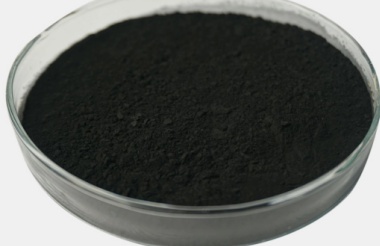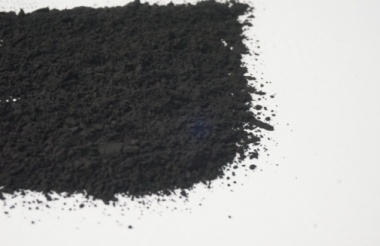
Porous carbon has become an increasingly critical material in advanced silicon applications, particularly in silicon deposition processes that demand thermal stability, mechanical reliability, and precise process control. As silicon-based technologies continue to evolve—driven by energy storage, electronics, and advanced manufacturing—the materials supporting silicon deposition must perform under extreme conditions while maintaining consistency over long operating cycles.
In this context, porous carbon stands out as a highly engineered material that offers a unique combination of controlled porosity, thermal resistance, chemical stability, and structural durability. These characteristics make it especially well suited for use in silicon deposition environments where traditional dense materials often fall short.
In this article, we explore the key benefits of porous carbon for silicon applications, focusing on how its material properties directly enhance deposition efficiency, process stability, and long-term operational performance.
Understanding Porous Carbon in Silicon Deposition
Porous carbon is a carbon-based material engineered with a network of interconnected pores. These pores can be precisely controlled in size, distribution, and volume, allowing the material to be tailored for specific industrial processes.
In silicon deposition systems—whether chemical vapor deposition (CVD), thermal deposition, or other high-temperature processes—porous carbon is commonly used as:
A substrate for silicon growth
A structural framework for silicon–carbon composites
A thermal management component
A reaction environment regulator
Its adaptability makes porous carbon a foundational material in modern silicon manufacturing lines.
Benefit 1: Superior Compatibility with Silicon Deposition Processes
One of the most important advantages of porous carbon lies in its natural compatibility with silicon deposition chemistry. In many deposition environments, materials are exposed to reactive gases, high temperatures, and repeated thermal cycling. Under such conditions, some metallic or ceramic materials may react, degrade, or introduce unwanted contamination. Porous carbon, by contrast, remains chemically stable and inert, even when exposed to aggressive deposition atmospheres.
The surface characteristics of porous carbon play a key role in this compatibility. Its interconnected pore structure provides abundant anchoring sites for silicon atoms during deposition. This promotes strong interfacial bonding and helps silicon layers form in a controlled and predictable manner. As a result, deposited silicon adheres more securely to the substrate, even during temperature fluctuations.
This behavior leads to several important advantages:
Strong adhesion of deposited silicon layers
Uniform nucleation and controlled crystal growth
Reduced risk of peeling, delamination, or interfacial failure during cooling
By minimizing chemical mismatch and interfacial stress, porous carbon significantly improves deposition quality while reducing material defects caused by incompatible substrates.
Benefit 2: Controlled Porosity for Enhanced Deposition Efficiency
The defining feature of porous carbon—its engineered pore structure—directly influences silicon deposition efficiency. Unlike dense materials with limited surface interaction, porous carbon allows manufacturers to precisely tailor pore size, distribution, and connectivity based on process requirements.
Controlled porosity improves how deposition gases flow and interact with active surfaces. Reactive gases can diffuse evenly through the pore network, increasing contact area and residence time. This leads to more efficient use of precursor materials and a higher degree of process control.
Key advantages of controlled porosity include:
Improved gas diffusion across deposition surfaces
More uniform silicon layer thickness across large areas
Better regulation of reaction kinetics and deposition rates
These factors allow silicon deposition systems to operate at higher efficiency, with reduced waste and improved repeatability between production batches. For high-throughput manufacturing environments, this translates directly into improved yield stability and lower process variability.
Benefit 3: Excellent Thermal Stability in High-Temperature Environments
Silicon deposition processes typically operate at elevated temperatures and often involve continuous or long-duration thermal exposure. Under these demanding conditions, material stability becomes a critical factor affecting both process reliability and final product quality. Porous carbon is exceptionally well suited to such environments due to its high thermal resistance and low coefficient of thermal expansion.
Unlike many metallic or ceramic materials that may expand unevenly, warp, or degrade under heat, porous carbon maintains dimensional stability across wide temperature ranges. Its engineered microstructure tolerates repeated heating and cooling cycles without developing internal cracks, delamination, or permanent deformation. This thermal resilience helps minimize stress at the interface between the substrate and deposited silicon.
Key thermal benefits include stable performance under repeated thermal cycling, reduced thermal stress on deposited silicon layers, and a lower risk of cracking, warping, or microstructural damage. By preserving consistent geometry and surface integrity, porous carbon supports uniform silicon growth over long production runs. This stability enables manufacturers to maintain tight quality tolerances and achieve consistent deposition results, even in high-throughput or continuous-operation systems.
Benefit 4: Mechanical Strength with Stress-Absorbing Structure
Although porous by design, engineered porous carbon exhibits impressive mechanical strength. Its interconnected pore network does more than increase surface area—it also functions as a stress-absorbing structure. Mechanical and thermal stresses that would otherwise concentrate at specific points in rigid materials are redistributed throughout the porous matrix.
This stress-buffering capability is particularly valuable in silicon deposition equipment, where components are exposed to thermal gradients, vibration, and continuous mechanical loading. Rather than failing abruptly, porous carbon accommodates these stresses gradually and predictably.
As a result, porous carbon delivers improved resistance to thermal shock, enhanced durability under continuous industrial operation, and a longer service life for deposition components. For manufacturers, this balance between strength and flexibility translates into reduced maintenance frequency, lower replacement costs, and improved overall equipment reliability—key advantages in long-term silicon deposition operations.

Benefit 5: Improved Thermal Management and Heat Distribution
Uniform temperature distribution is essential for consistent silicon deposition. Porous carbon contributes to effective thermal management by:
Distributing heat evenly across deposition zones
Reducing localized hot spots
Supporting stable process temperatures
These thermal properties help maintain consistent silicon growth conditions, improving overall product quality and reducing process variability.
Benefit 6: Process Stability and Repeatability
In industrial silicon applications, repeatability is just as important as performance. Porous carbon supports stable process conditions by maintaining consistent physical and chemical behavior over time.
This leads to:
For manufacturers scaling silicon deposition operations, this reliability is essential for maintaining quality control.
Benefit 7: Long Service Life and Reduced Downtime
Porous carbon components are designed to withstand:
As a result, they require less frequent replacement compared to many alternative materials. This durability translates directly into:
Reduced maintenance frequency
Lower operational downtime
Improved production efficiency
Over the full lifecycle of a silicon deposition system, porous carbon offers significant cost and reliability advantages.
Typical Porous Carbon Functions in Silicon Applications
Function | Role in Silicon Deposition |
Substrate | Supports silicon growth with strong adhesion |
Structural framework | Forms silicon–carbon composite structures |
Thermal component | Stabilizes temperature distribution |
Gas diffusion medium | Regulates reaction environment |
Long-life component | Withstands repeated deposition cycles |
Manufacturing Considerations for Porous Carbon in Silicon Deposition
To fully realize the benefits of porous carbon, material selection must be aligned with process requirements. Key parameters include:
Pore size distribution for gas flow and silicon adhesion
Mechanical strength for long-term durability
Thermal resistance for high-temperature stability
Chemical compatibility with deposition gases
Careful engineering ensures that porous carbon performs optimally throughout the deposition lifecycle.
At Zhejiang Apex Energy Technology Co., Ltd., we work closely with industrial partners to develop porous carbon solutions tailored to specific silicon deposition processes, balancing performance, durability, and operational efficiency.
Why Porous Carbon Continues to Gain Importance in Silicon Manufacturing
As silicon applications expand into more advanced and demanding fields, the supporting materials must evolve accordingly. Porous carbon’s ability to combine structural stability, thermal resilience, and process adaptability makes it increasingly valuable in next-generation silicon manufacturing environments.
Its role is no longer limited to a single function—it is now a multifunctional material supporting performance, reliability, and scalability across silicon deposition systems.
Conclusion
Porous carbon offers a comprehensive set of benefits for silicon applications, particularly in deposition processes that demand precision, stability, and long-term durability. From enhancing silicon adhesion and deposition efficiency to improving thermal management and reducing maintenance downtime, porous carbon has proven itself as a high-performance industrial material.
By carefully tailoring porous carbon properties to specific silicon deposition requirements, manufacturers can achieve more consistent results, higher yields, and improved operational reliability. For organizations seeking to optimize their silicon processes, porous carbon represents a technically sound and future-ready solution.
If you would like to explore how porous carbon can be adapted to your silicon deposition applications, we welcome you to connect with Zhejiang Apex Energy Technology Co., Ltd. for further technical discussion and collaboration.
FAQ
1. Why is porous carbon suitable for silicon deposition?
Porous carbon offers thermal stability, controlled porosity, and chemical compatibility that support uniform silicon growth and long-term process reliability.
2. How does pore size affect silicon deposition performance?
Pore size influences gas diffusion, silicon adhesion, and reaction kinetics, directly impacting deposition efficiency and uniformity.
3. Can porous carbon withstand repeated high-temperature cycles?
Yes. Porous carbon is engineered to maintain structural integrity under continuous thermal cycling common in silicon deposition systems.
4. Is porous carbon customizable for different silicon processes?
Yes. Porous carbon can be tailored in pore structure, strength, and thermal properties to match specific silicon deposition requirements.