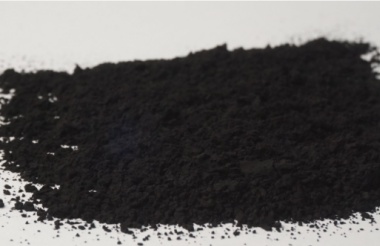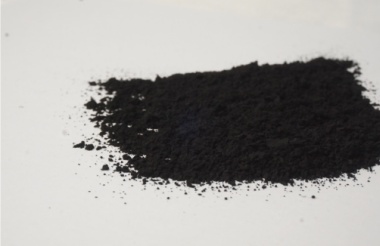
As global demand for high-efficiency energy storage continues to rise, supercapacitors have emerged as a critical technology bridging the gap between traditional capacitors and batteries. At the heart of this technology lies a highly engineered material: supercapacitor activated carbon. Its unique pore structure, electrical conductivity, and chemical stability make it indispensable for achieving high power density, fast charge–discharge cycles, and long service life.
In industrial energy storage systems—especially those supporting advanced manufacturing, electronics, and silicon-related processes—material performance directly determines system reliability and efficiency. Supercapacitor activated carbon plays a central role in enabling energy storage solutions that are robust, scalable, and suitable for demanding operational environments.
This article explains how supercapacitor activated carbon works, why its structure is critical to energy storage performance, and how it supports modern industrial energy systems.
Understanding Supercapacitor Activated Carbon
Supercapacitor activated carbon is a form of carbon material engineered with an extremely high specific surface area and a precisely controlled pore structure. Unlike conventional carbon materials, it is designed specifically for electrochemical energy storage applications.
In supercapacitors, activated carbon is typically used as the electrode material, where it stores electrical energy through electrostatic charge accumulation rather than chemical reactions. This mechanism allows supercapacitors to deliver rapid power output and withstand millions of charge–discharge cycles with minimal degradation.
Key characteristics of supercapacitor activated carbon include:
High surface area (often >1,500 m²/g)
Optimized micro- and mesopore distribution
High electrical conductivity
Excellent chemical and thermal stability
How Supercapacitors Store Energy
To understand how supercapacitor activated carbon works, it is important to first understand the basic working principle of supercapacitors.
Unlike lithium-ion batteries, which store energy through chemical reactions, supercapacitors store energy via electrostatic charge separation at the electrode–electrolyte interface. This occurs in a structure known as the electric double layer.
Role of Activated Carbon in the Electric Double Layer
Activated carbon provides an enormous internal surface area due to its porous structure. When voltage is applied:
Ions from the electrolyte migrate into the pores
Charges accumulate on the carbon surface
Energy is stored without altering the carbon’s chemical structure
This process enables:
Pore Structure: The Core of Performance
The performance of supercapacitor activated carbon is fundamentally determined by its pore structure, particularly the distribution and connectivity of pores at different scales. Unlike conventional carbon materials, activated carbon for supercapacitors is carefully engineered to maximize usable surface area while ensuring efficient ion transport. This balance directly affects capacitance, power output, and overall system efficiency.
Types of Pores and Their Functions
Pore Type | Size Range | Function in Supercapacitors |
Micropores | < 2 nm | Primary charge storage area |
Mesopores | 2–50 nm | Ion transport pathways |
Macropores | > 50 nm | Electrolyte access and diffusion |
Micropores provide the majority of the surface area where electrostatic charge is stored. A higher volume of accessible micropores generally leads to higher capacitance. However, if micropores dominate without sufficient transport pathways, ion movement becomes restricted.
Mesopores play a critical supporting role by acting as channels that allow ions to move quickly between the electrolyte and micropore surfaces. Well-developed mesopores reduce diffusion resistance and improve rate capability, especially during fast charge–discharge cycles.
Macropores, while contributing less to charge storage, serve as reservoirs and access routes for the electrolyte, ensuring that ions can rapidly reach internal pore networks.
An optimized balance between micropores and mesopores ensures:
High capacitance through effective charge storage
Low internal resistance by minimizing diffusion barriers
Efficient ion movement under high current conditions
This pore engineering is particularly critical for industrial energy storage systems that demand both high energy density and high power output.
Electrical Conductivity and Charge Transfer
While surface area and pore structure are essential, electrical conductivity is equally critical to supercapacitor performance. Supercapacitor activated carbon must allow electrons to move efficiently throughout the electrode structure to match the rapid ion movement occurring in the pores.
High-quality activated carbon minimizes internal resistance by:
Maintaining continuous and interconnected conductive pathways
Reducing contact resistance between carbon particles
Supporting uniform current distribution across the electrode
Poor conductivity can limit power output, increase heat generation, and reduce system efficiency—even if pore structure is well optimized. In contrast, low-resistance carbon materials allow supercapacitors to deliver high current quickly and repeatedly without excessive energy loss.
Low internal resistance directly improves:
Power efficiency during rapid charge–discharge
Thermal stability under high current loads
Performance consistency in high-frequency cycling
These characteristics are especially important in industrial energy storage systems used for automation, electronics manufacturing, power buffering, and high-frequency power regulation.
Thermal and Chemical Stability in Industrial Systems
Supercapacitors are often deployed in environments involving temperature fluctuations, electrical stress, and long operating hours. In such conditions, material stability becomes a decisive factor in system reliability. Activated carbon offers excellent thermal and chemical stability, allowing supercapacitors to operate consistently over long service lifetimes.
Key stability advantages include:
Resistance to oxidation and chemical degradation
Stable electrochemical performance across wide temperature ranges
Compatibility with a variety of aqueous and organic electrolytes
These properties ensure that activated carbon electrodes maintain their structure and performance even under continuous operation. As a result, supercapacitor activated carbon is well suited for integration into energy systems supporting silicon processing, electronics manufacturing, and advanced industrial equipment, where reliability and uptime are critical.

Benefits of Supercapacitor Activated Carbon in Energy Storage
Supercapacitor activated carbon delivers a unique combination of performance advantages that make it highly suitable for modern industrial energy storage systems. Its role in enabling fast power delivery, long operational life, and high reliability sets it apart from conventional battery materials.
High Power Density
Activated carbon allows supercapacitors to deliver energy almost instantly. This rapid response makes them ideal for applications requiring short but powerful bursts of energy, such as peak power assistance, regenerative braking systems, and short-duration energy buffering. In these scenarios, supercapacitors can absorb and release energy far more quickly than batteries.
High power density enables supercapacitors to respond immediately to sudden load changes, protecting equipment from voltage drops and power fluctuations. This capability is especially valuable in automated production lines, power stabilization systems, and electronic manufacturing environments where voltage stability is critical.
Long Cycle Life
Because energy storage in supercapacitors is based on electrostatic charge separation rather than chemical reactions, activated carbon electrodes do not undergo significant structural changes during operation. As a result, supercapacitors can withstand millions of charge–discharge cycles with minimal performance degradation.
This exceptional cycle life reduces maintenance demands and replacement frequency, making supercapacitor activated carbon a cost-effective solution for industrial users seeking low total cost of ownership and long-term reliability.
Fast Charging Capability
Supercapacitors can be charged in seconds or minutes instead of hours. This fast charging capability improves system responsiveness, increases operational uptime, and enhances energy recovery efficiency. In industrial environments where power availability and system continuity are essential, fast-charging energy storage provides a clear operational advantage.
Comparison: Supercapacitors vs. Batteries
Parameter | Supercapacitors (Activated Carbon) | Lithium-Ion Batteries |
Charge Time | Seconds to minutes | Hours |
Cycle Life | >1,000,000 cycles | 500–3,000 cycles |
Power Density | Very high | Moderate |
Energy Density | Lower | Higher |
Maintenance | Low | Moderate |
In many industrial systems, supercapacitors and batteries are used together to combine the high power capability of supercapacitors with the high energy capacity of batteries, achieving a balanced and efficient energy storage solution.
Manufacturing Considerations for Activated Carbon
Producing supercapacitor-grade activated carbon requires precise control over:
Raw material selection
Activation process
Pore size tuning
Purity and ash content
Consistency is critical, as small variations can significantly impact capacitance and resistance.
At Zhejiang Apex Energy Technology Co., Ltd., we collaborate with industrial partners to develop activated carbon materials optimized for supercapacitor applications, focusing on stable performance, scalable production, and long-term reliability.
Applications of Supercapacitor Activated Carbon in Industrial Energy Systems
Supercapacitor activated carbon is widely used in:
Industrial power backup systems
Energy buffering for automation equipment
Renewable energy integration
Electronics and semiconductor manufacturing support systems
Transportation and grid stabilization
Its reliability and responsiveness make it particularly valuable in environments where continuous operation and power stability are critical.
Conclusion
Supercapacitor activated carbon is a cornerstone material in modern energy storage systems. Through its high surface area, optimized pore structure, electrical conductivity, and durability, it enables fast, reliable, and long-lasting energy storage solutions.
For industrial applications—especially those supporting advanced manufacturing and silicon-related processes—supercapacitors powered by high-quality activated carbon provide stability, efficiency, and scalability. As energy demands grow more complex, the role of supercapacitor activated carbon will continue to expand.
If you would like to explore how supercapacitor activated carbon can support your energy storage systems, we welcome technical discussions with Zhejiang Apex Energy Technology Co., Ltd. to identify solutions aligned with your operational goals.
FAQ
1. Why is activated carbon used in supercapacitors?
Because its high surface area and pore structure allow efficient electrostatic energy storage.
2. How does pore size affect supercapacitor performance?
Micropores store charge, while mesopores enable fast ion transport, improving power efficiency.
3. Can supercapacitor activated carbon handle industrial conditions?
Yes. It offers excellent thermal and chemical stability for long-term industrial operation.
4. Are supercapacitors a replacement for batteries?
Not entirely. They complement batteries by providing high power and fast response.