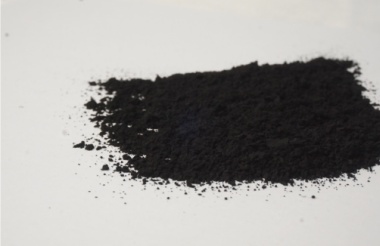
The surge in EV manufacturing, renewable energy buffering, and industrial grid stability relies heavily on electrochemical double-layer capacitors (EDLCs). Yet, the limiting factor for scaling these systems isn't just design. It is the electrochemical purity and structural consistency of the electrode materials.
Engineers face a persistent trade-off between energy density, equivalent series resistance (ESR), and unit cost. Material costs account for up to 71% of supercapacitor manufacturing. This reality makes raw material selection a critical commercial risk.
Securing a dependable supercapacitor activated carbon supplier dictates product performance, including capacitance and cycle life. You will learn how to evaluate these materials, avoid common sourcing traps, and confidently select the right carbon for your next-generation energy storage products.
Key Takeaways
Pore Hierarchy Drives Performance: Balancing micropores (<2 nm) for energy storage with mesopores (2–50 nm) for fast ion transport is non-negotiable for high-capacitance EDLCs.
Purity is a Security Metric: Strict control over ash content (≤0.5%) and heavy metals prevents self-discharge and dangerous gas evolution during operation.
Supply Chain as a Feature: Diversifying biomass feedstocks ensures cost stability, helping manufacturers target the critical sub-$10/kg raw material cost threshold for mass adoption.
The Business Case for Premium Supercapacitor Activated Carbon
Supercapacitors are rapidly evolving. They successfully fill the performance gap between traditional capacitors and lithium-ion batteries. Traditional capacitors deliver high power. Batteries provide high energy. Supercapacitors offer both rapid charge rates and extreme cycle longevity. Enterprise-level success demands devices that easily exceed 100,000 cycles.
We see a clear material bottleneck in this space. Activated carbon dominates the market today. It offers unmatched scalability and a high specific surface area. However, commodity-grade carbon often fails under pressure. It cannot meet the strict voltage stability and energy density requirements of modern EVs and smart grids.
Premium materials drastically reduce defect rates during electrode coating. They also minimize expensive post-production testing costs. When you source high-quality supercapacitor activated carbon, you build a more reliable end product. Your manufacturing yields improve, lowering your overall cost per unit.
Best Practice: Always align your carbon procurement strategy directly to specific end-use application requirements rather than buying on bulk price alone.
Common Mistake: Assuming water-filtration grade carbon can be repurposed for energy storage. It inherently lacks the necessary electrochemical stability.
Evaluating Core Material Specs: Pore Structure and Capacitance
Engineers often chase a highly elevated BET surface area, such as values over 2000 m²/g. This approach is highly misleading. High surface area does not always equal high performance. Evaluation must instead focus on the accessible surface area. This usable area must directly match the specific electrolyte ion size you plan to use.
We can understand this through the "highway and parking lot" model.
Micropores (<2 nm): They act as the "parking lots". This is where actual charge storage occurs.
Mesopores (2–50 nm): They function as the "highways". They enable rapid ion transport during high-current surges.
You need a delicate balance of both to achieve optimal energy density and power output. If you only have micropores, ions experience a traffic jam during rapid discharge.
Look for optimal supplier baselines. We recommend supplier specs guaranteeing specific surface areas between 1500 and 1700 m²/g. This should always be paired with highly concentrated pore size distributions.
Pore Functionality Chart
Pore Type | Size Range | Primary Function | Analogy |
Micropores | < 2 nm | Charge storage and ion adsorption | Parking Lots |
Mesopores | 2 – 50 nm | Rapid ion transport pathways | Highways |
Macropores | > 50 nm | Electrolyte reservoir and structural support | City Entrances |
Purity and Consistency: The Unseen Drivers of Cycle Life
Impurities pose a severe threat to electrochemical devices. Trace heavy metals and high ash content act as catalysts. They trigger parasitic side reactions inside the cell. Over time, these reactions silently degrade the electrolyte and damage the electrode matrix.
This directly impacts Equivalent Series Resistance (ESR) and safety. Impurities drastically increase ESR. Elevated ESR generates unwanted heat during rapid charge cycles. More dangerously, it triggers hydrogen evolution, commonly known as gassing. This gas buildup can swell pouch cells. In extreme cases, it can rupture cylindrical casings, causing catastrophic device failure.
Manufacturing realities demand rigorous quality control. A reliable supplier must guarantee lot-to-lot consistency. They must maintain a tightly controlled particle size distribution. For example, a target D50 should sit comfortably around 5 to 8 µm. Furthermore, you must enforce strict maximum ash thresholds of ≤0.5%. Anything higher compromises long-term reliability.
Best Practice: Request a trace metal assay for every single batch delivered to your facility.
Common Mistake: Overlooking iron and copper trace limits, which frequently cause micro-short circuits in advanced cells.
Supercapacitor Activated Carbon vs. Emerging Alternatives (Graphene/CNTs)
The market features several distinct solution categories. You will find traditional EDLC carbon, pseudocapacitor materials like metal oxides, and advanced nanocarbons like graphene or carbon nanotubes (CNTs). Each addresses different engineering needs.
Graphene genuinely boasts superior electrical conductivity. It looks incredible in laboratory settings. Yet, its prohibitive synthesis cost limits its standalone application in large-scale energy storage. You simply cannot build a cost-effective grid buffer using pure graphene today.
Pragmatic manufacturers employ a hybrid approach. They use premium supercapacitor activated carbon as the bulk electrode matrix. They then incorporate graphene or CNTs merely as conductive additives. This intelligent blending achieves 80% of the maximum theoretical performance. More importantly, it does so at a mere fraction of the cost.
Material Category Comparison Table
Material Category | Cost Profile | Electrical Conductivity | Commercial Scalability |
Traditional Activated Carbon | Low ($) | Moderate | Extremely High |
Pseudocapacitors (Metal Oxides) | High ($$$) | Variable | Low to Moderate |
Graphene / CNTs | Very High ($$$$) | Excellent | Low (Standalone) |
Hybrid Composite Matrix | Moderate ($$) | High | High |
Supply Chain Resilience and ESG Compliance
The industry suffers from notable sourcing vulnerabilities. Historically, manufacturers have over-relied on single-origin Southeast Asian coconut shells. This dependency creates severe pricing volatility. It also routinely triggers unpredictable supply bottlenecks during shipping crises or regional disruptions.
Biomass innovation offers a sustainable path forward. We recommend evaluating suppliers who utilize diverse, renewable biomass waste. Excellent examples include agricultural byproducts. This approach supports corporate ESG metrics by promoting a circular economy. It actively mitigates geographical supply risks by decentralizing raw material sourcing.
These innovations align closely with macro cost objectives. Industry consensus points to a harsh reality. Electrode carbon costs must drop below $10/kg. We need to reach this threshold to enable widespread, grid-scale EDLC adoption. Scalable, diversified supplier operations represent the only viable path to this critical benchmark.
Framework for Shortlisting a Carbon Material Partner
Choosing the right partner requires a systematic approach. You must look beyond simple marketing claims. Rigorous vetting ensures consistent cell performance and protects your brand reputation.
Follow these structured steps to evaluate potential material partners:
Technical Validation: Verify their reporting standards. Do they provide comprehensive analysis reports per batch? You need detailed data on BET surface area, pore size distribution, and trace metal assays.
Customization Capabilities: Assess their engineering flexibility. Can they adjust the activation process? Look for partners who can alter temperature profiles or implement heteroatom doping, like adding Nitrogen or Oxygen. This customization must exactly match your specific ionic or organic electrolytes.
Pilot-to-Production Scaling: Evaluate their manufacturing consistency. Assess the supplier’s ability to move from kg-level R&D sampling to multi-ton commercial deliveries. They must achieve this scaling without a drop in tap density or purity.
Next-Step Actions: Initiate the testing phase. Request a 1kg test sample. Always demand a detailed Certificate of Analysis (CoA) specifically matched to your target electrolyte.
Conclusion
The performance ceiling of any energy storage device is inherently capped by its foundational materials. High-purity, structurally optimized activated carbon is not a mere commodity. It is a highly engineered component essential to device longevity.
Choosing a supplier goes far beyond the basic cost-per-kilogram. It requires a strategic alignment of goals. You must carefully evaluate their quality control measures, ESG sourcing practices, and batch-to-batch repeatability to ensure market success.
Contact our technical engineering team today. Request sample materials and review our tight D50 and ash specifications. Let us discuss custom pore-matching strategies for your next-generation supercapacitor designs.
FAQ
Q: What makes supercapacitor activated carbon different from standard water-filtration carbon?
A: Standard filtration carbon focuses on chemical adsorption. Supercapacitor carbon focuses on electrochemical purity. It requires sub-0.5% ash and near-zero heavy metals. It also demands a specific particle size distribution, typically a D50 of 5-8µm. Furthermore, it utilizes a highly engineered mesopore and micropore ratio optimized specifically for electrolyte ion movement.
Q: How does tap density affect supercapacitor manufacturing?
A: Higher tap density is a crucial manufacturing metric. It allows engineers to pack more active material into a fixed electrode volume, such as a cylindrical or pouch cell. This dense packing directly increases the overall volumetric energy density of your final energy storage product.
Q: Can heteroatom doping improve activated carbon performance?
A: Yes. Introducing oxygen or nitrogen atoms into the carbon lattice during the activation process creates active sites. This provides additional faradaic pseudocapacitance through redox reactions. It effectively boosts the overall energy storage capacity well beyond standard physical double-layer adsorption limits.


